Body: Two to three inches is the range that suppresses weeds and holds moisture without suffocating roots. Thinner and weeds push straight through. Thicker and water stops reaching the soil. We measure rather than eyeball it.
Excavation, grading and soil amendment happen before any mulch arrives. Winnipeg clay drains slowly, so bed depth and slope decide whether your plants thrive or sit in water.
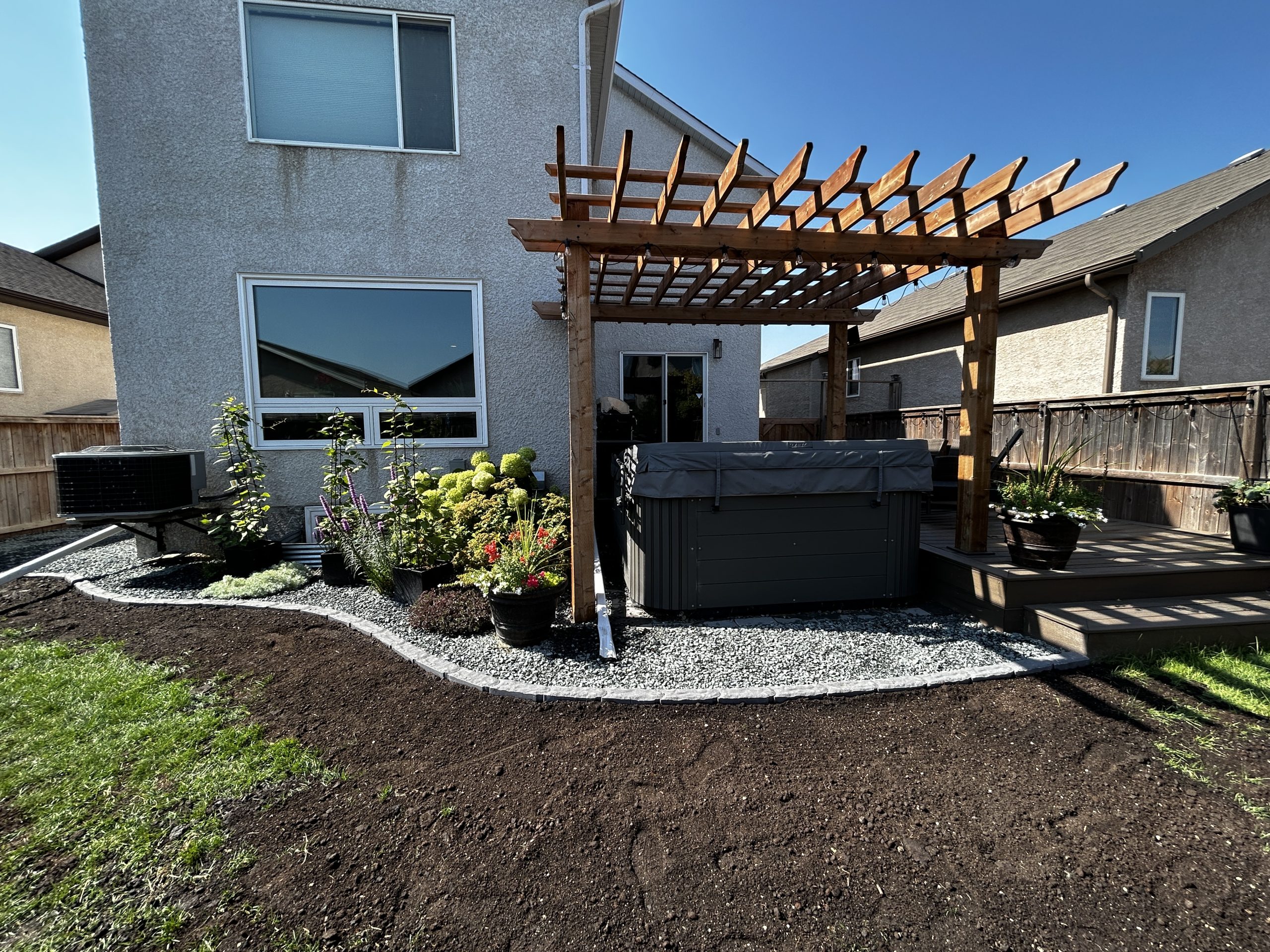
Mulch needs something to hold it. We finish beds with a spade cut edge, paver soldier course, or steel edging depending on the design, so the line stays crisp and the mulch stays in the bed.
Mulch volcanoes piled against trunks trap moisture and invite rot and rodents. We keep material back from every trunk and crown so the plant collar breathes.
Tyler is on every project, including the finishing work. The person who designed your bed layout is the person checking the depth and the edge before the crew leaves.
Our workmanship warranty covers the build: the bed construction, the grading, the edging. Mulch is an organic material that breaks down over time, and we tell you that upfront rather than overselling it.
The standard choice for planting beds. Shredded bark knits together and holds on a slope better than loose chip, which makes it a good fit for graded Winnipeg yards. It breaks down into the soil over a few seasons and improves structure as it goes.
The mulch is the last two inches of a bed that is often eight or more inches deep. Soil quality, grade away from the foundation, and the edge detail are what make a bed last. We build those first and treat mulch as the top layer of a finished assembly.

We walk the property with you, look at where water goes after a storm, and lay out bed shapes with marking paint so you can see the lines before anything is cut.
Beds get cut to depth and graded to move water away from the foundation and toward where you want it. On heavy clay this step matters more than the plants you choose.
We amend the bed soil to suit what is going in it. Compacted subsoil gets broken up so roots have somewhere to go rather than circling in the planting hole.
The containment edge goes in before the mulch. Spade cut for a soft natural line, a paver soldier course where the bed meets a patio, or steel where a hard permanent edge suits the design.
Mulch goes in at two to three inches, raked to an even depth, pulled back from every stem and trunk, and cut clean against hard edges. Site gets swept and the beds get a final walkthrough with you.


Tell us about your project and we will help you figure out if Genesis is the right fit. No pressure, just an honest conversation about your space and your goals.
Tell us about your project and we will help you figure out if Genesis is the right fit. No pressure, just an honest conversation about your space and your goals.