


Retaining Wall Cost in Winnipeg: Full Breakdown (2026 Guide)

Retaining Wall Cost in Winnipeg: Full Breakdown (2026 Guide)
But pricing can vary significantly depending on the project.
Some homeowners expect a simple wall to be a small upgrade, while others are surprised at how complex — and important — proper installation actually is.
Understanding what goes into the cost of a retaining wall helps you make the right decision and avoid problems down the road.
Average Retaining Wall Cost in Winnipeg
In 2026, most retaining wall projects in Winnipeg fall within these ranges:
- Small walls (garden or decorative): $3,000 – $8,000
- Medium structural walls: $8,000 – $20,000
- Large or engineered walls: $20,000 – $50,000+
Costs depend heavily on site conditions, materials, and how much preparation is required.
What Affects Retaining Wall Cost?
There’s no single price because every yard is different.
Several key factors influence cost:
- wall height and length
- soil conditions
- drainage requirements
- access to the site
- material selection
In many cases, the cost isn’t just about the wall itself — it’s about preparing the ground properly so the wall doesn’t fail over time.
Excavation and Base Preparation
One of the biggest cost factors is what happens below the surface.
Proper excavation and base preparation are critical to prevent shifting, leaning, or collapse.
This includes:
- removing unstable soil
- installing a compacted gravel base
- ensuring the wall has a stable foundation
Drainage Requirements (Critical in Winnipeg)
Drainage is one of the most overlooked — and most important — parts of a retaining wall.
Without proper drainage:
- water builds up behind the wall
- pressure increases
- failure becomes likely
This is especially important in Winnipeg, where clay soil and freeze thaw cycles create additional stress on structures.
Material Options and Pricing
The material you choose has a major impact on cost.
Common options include:
Concrete Block (Most Popular)
- durable and versatile
- ideal for structural walls
- mid range pricing
Natural Stone
- high end appearance
- more labour intensive
- higher cost
Timber (Less Common for Structural Use)
- lower upfront cost
- shorter lifespan
Each material has its place depending on the design and purpose of the wall.
Height and Engineering Requirements
As walls get taller, costs increase quickly.
Walls over a certain height may require:
- engineering design
- geogrid reinforcement
- permits and inspections
These factors add to cost but are necessary for safety and long term performance.
Site Conditions and Access
Not all yards are easy to work with.
Costs increase when:
- access is limited
- heavy equipment can’t reach the area
- excavation is more complex
Properties with significant elevation changes often require more extensive preparation and planning.
Retaining Walls and Yard Grading
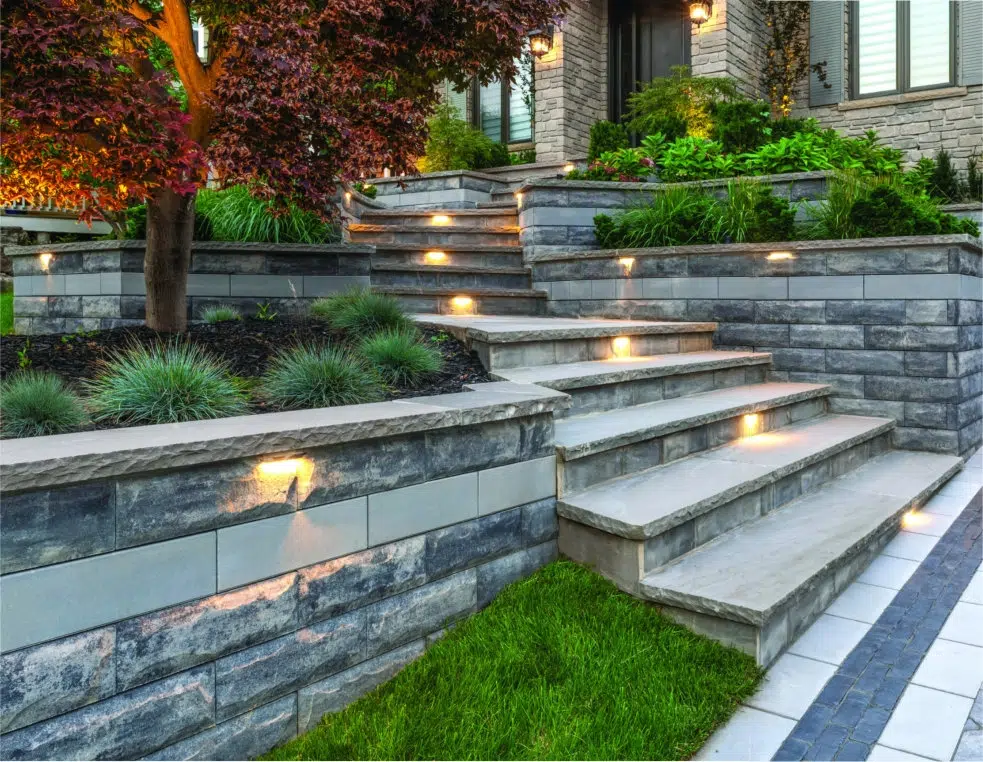
Retaining walls are often part of a larger grading solution.
They are used to:
- manage slopes
- create usable space
- control water flow
In many cases, walls are installed because grading alone isn’t enough to solve the problem.
How Drainage and Grading Work Together
A retaining wall is not a standalone feature — it works as part of the overall drainage system of your property.
If water is not properly directed:
- pressure builds behind the wall
- soil movement increases
- long term issues develop
Can You Build a Retaining Wall Yourself?
Small decorative walls may be manageable for DIY projects.
However, structural retaining walls require:
- proper excavation
- base preparation
- drainage installation
- structural reinforcement
Mistakes in any of these areas can lead to failure within a few seasons.
Why Cheap Retaining Walls Cost More
Low cost quotes often cut corners on:
- base preparation
- drainage
- material quality
This leads to:
- leaning walls
- cracking
- premature failure
In Winnipeg, these shortcuts are especially risky due to soil and climate conditions.
How Long Should a Retaining Wall Last?
A properly installed retaining wall can last 25–50+ years depending on materials and construction quality.
Like other hardscape features, longevity depends on what’s below the surface just as much as what’s visible.
When Is a Retaining Wall Worth It?
A retaining wall is worth the investment when it:
- solves drainage issues
- creates usable yard space
- prevents erosion
- protects structures
In many cases, it’s not just an upgrade — it’s a necessary solution to a larger problem.
Frequently Asked Questions
Q: How much does a retaining wall cost in Winnipeg?
A: Most retaining walls cost between $3,000 and $50,000+ depending on size, materials, and site conditions.
Q: What affects retaining wall cost the most?
A: The biggest factors are wall height, base preparation, drainage requirements, and material selection.
Q: Are retaining walls expensive in Winnipeg?
A: They can be, especially when built properly to handle drainage and soil conditions.
Q: Do retaining walls require drainage?
A: Yes, proper drainage is essential to prevent pressure buildup and failure.
Q: How long do retaining walls last?
A: A properly built retaining wall can last 25–50+ years.
Q: Can a retaining wall increase property value?
A: Yes, especially when it improves usability, drainage, and overall landscape design.
Build a Retaining Wall That Actually Lasts
Retaining walls are more than just a visual upgrade — they’re a structural solution that needs to be built properly from the ground up.
At Genesis Interlocking & Custom Landscaping, we design and install retaining walls in Winnipeg that are built for long term performance, proper drainage, and real world conditions.
Contact us today to get a detailed quote and expert guidance for your project.
Popular Posts

What to Budget for Landscaping a New Home in Winnipeg
Learn how much to budget for landscaping a new home in Winnipeg, including grading, patios, drainage, and full yard construction costs.
What Order Should Landscaping Be Done in Winnipeg?
Learn the correct order for landscaping projects in Winnipeg, including grading, drainage, hardscaping, and planting for long-term results.
Landscaping a New Build in Winnipeg: Where to Start
Discover how to plan landscaping for a new build in Winnipeg, including grading, drainage, hardscaping, and phased project planning.
Categories
Tags
base preparation (2) contractor pricing Winnipeg (2) drainage problems (2) drainage problems Winnipeg (2) drainage Winnipeg (4) driveway pavers Winnipeg (2) foundation drainage (2) foundation drainage landscaping (1) grading Winnipeg (6) hardscaping mistakes (3) hardscaping repair (1) hardscaping Winnipeg (12) hire landscaper Winnipeg (2) interlocking base (1) interlocking drainage (1) interlocking patio Winnipeg (4) interlocking Winnipeg (4) landscape grading Winnipeg (1) landscaping (3) landscaping company Winnipeg (2) landscaping contractor Winnipeg (5) landscaping cost Winnipeg (6) landscaping mistakes Winnipeg (2) landscaping quotes Winnipeg (4) landscaping tips Winnipeg (3) landscaping Winnipeg (13) new build landscaping (2) outdoor living spaces Winnipeg (3) patio installation Winnipeg (3) paver base (1) paver installation guide (1) paver repair Winnipeg (2) retaining wall problems (2) retaining walls Winnipeg (7) Services (2) soil grading (2) water pooling yard (2) water pooling yard Winnipeg (1) Winnipeg landscaper (6) Winnipeg Landscaping (3) yard construction (2) yard drainage (3) yard drainage Winnipeg (2) yard flooding prevention Winnipeg (1) yard grading Winnipeg (3)