


Proper Base for Interlocking Winnipeg | Paver Base Guide
What Is the Proper Base for Interlocking in Winnipeg?
The base is the most important part of any interlocking project. While the surface pavers get all the attention, it’s what’s underneath that determines whether your patio, driveway, or walkway will last 20+ years — or start sinking within a few seasons.
In Winnipeg, proper base preparation is even more critical due to clay soil, freeze-thaw cycles, and seasonal moisture changes. Without the right foundation, even the highest-quality pavers will fail.
Why Base Preparation Matters
Interlocking pavers are not installed on concrete — they rely on a flexible base system designed to move slightly with the ground while maintaining structural integrity.
A properly built base:
- Prevents sinking and shifting
- Supports heavy loads (especially driveways)
- Allows proper drainage
- Handles freeze-thaw movement
- Extends the lifespan of the installation
Most interlocking failures in Winnipeg are caused by poor base preparation — not the pavers themselves.
If you’re planning an interlocking patio or driveway, proper installation methods are just as important as the materials used.
The Proper Base Structure (Step-by-Step)
A professional interlocking base consists of multiple layers working together.
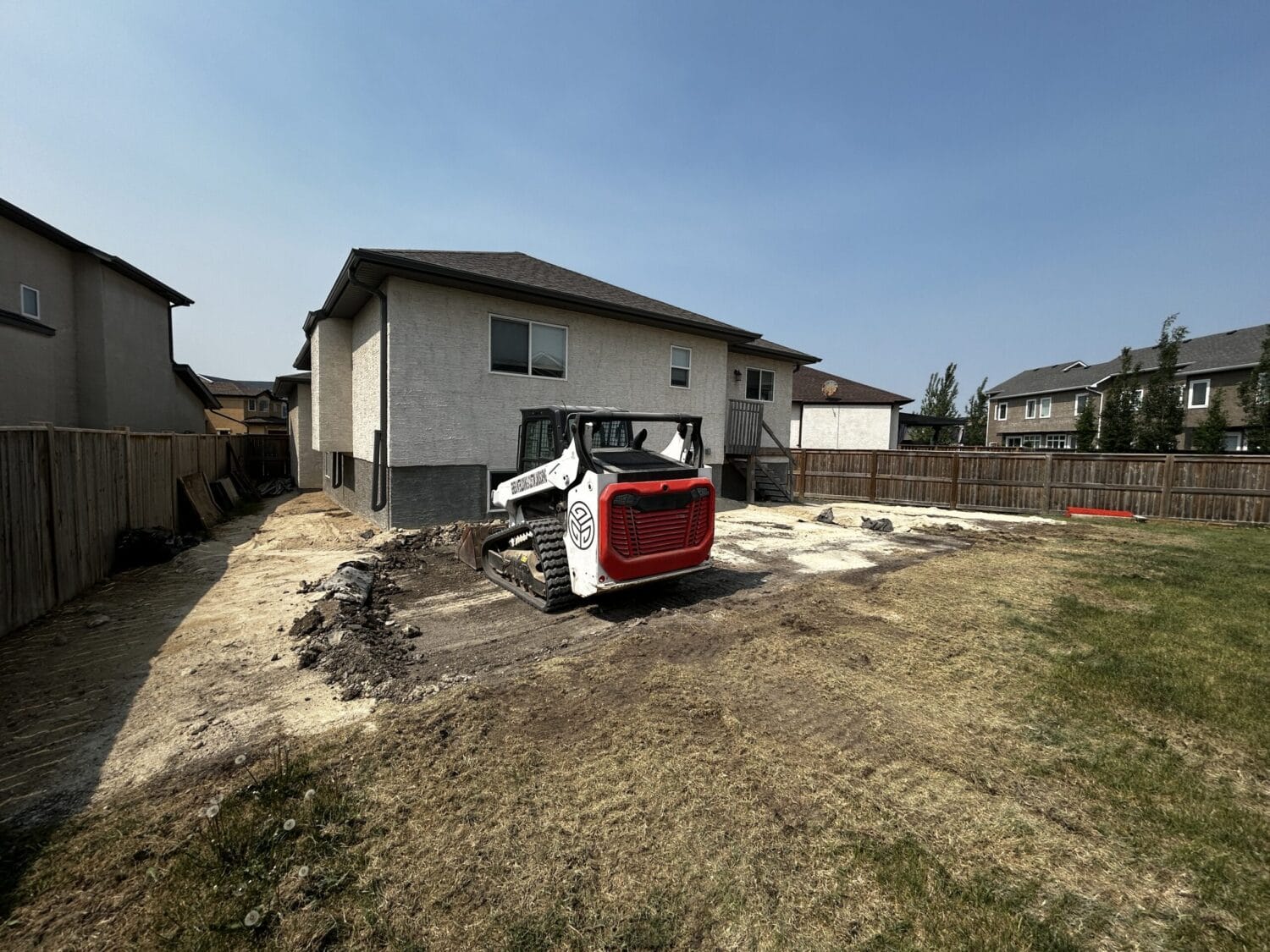
Excavation
The first step is removing existing soil to the correct depth.
Typical excavation depth:
- Patios & walkways: 8–12 inches
- Driveways: 12–18+ inches
Depth depends on soil conditions, load requirements, and drainage needs.
This is where many contractors cut corners — not digging deep enough is one of the biggest causes of failure.
Subgrade Preparation
After excavation, the exposed soil (subgrade) must be:
- Leveled and compacted
- Free of organic material
- Stabilized if necessary
In Winnipeg, clay soil can hold water and expand during freezing. Proper subgrade preparation is essential to prevent movement.
Geotextile Fabric
A geotextile fabric layer is often installed between the soil and base material.
It helps:
- Prevent mixing of soil and gravel
- Improve stability
- Reduce long-term settling
This is especially important in clay-heavy Winnipeg soil.
Base Material (Granular Fill)
This is the core of the system.
We use:
- Crushed limestone or gravel (not sand)
Installed in layers and compacted repeatedly.
Typical thickness:
- Patios: 6–10+ inches
- Driveways: 12-24+ inches
Each layer is compacted using a plate compactor to ensure density and strength.
Bedding Layer (Screed Layer)
A thin layer of bedding material is placed on top of the base.
- Typically 1 inch thick
- Made of fine stone / sand
- Screeded perfectly level
This layer allows precise placement of pavers.
Paver Installation
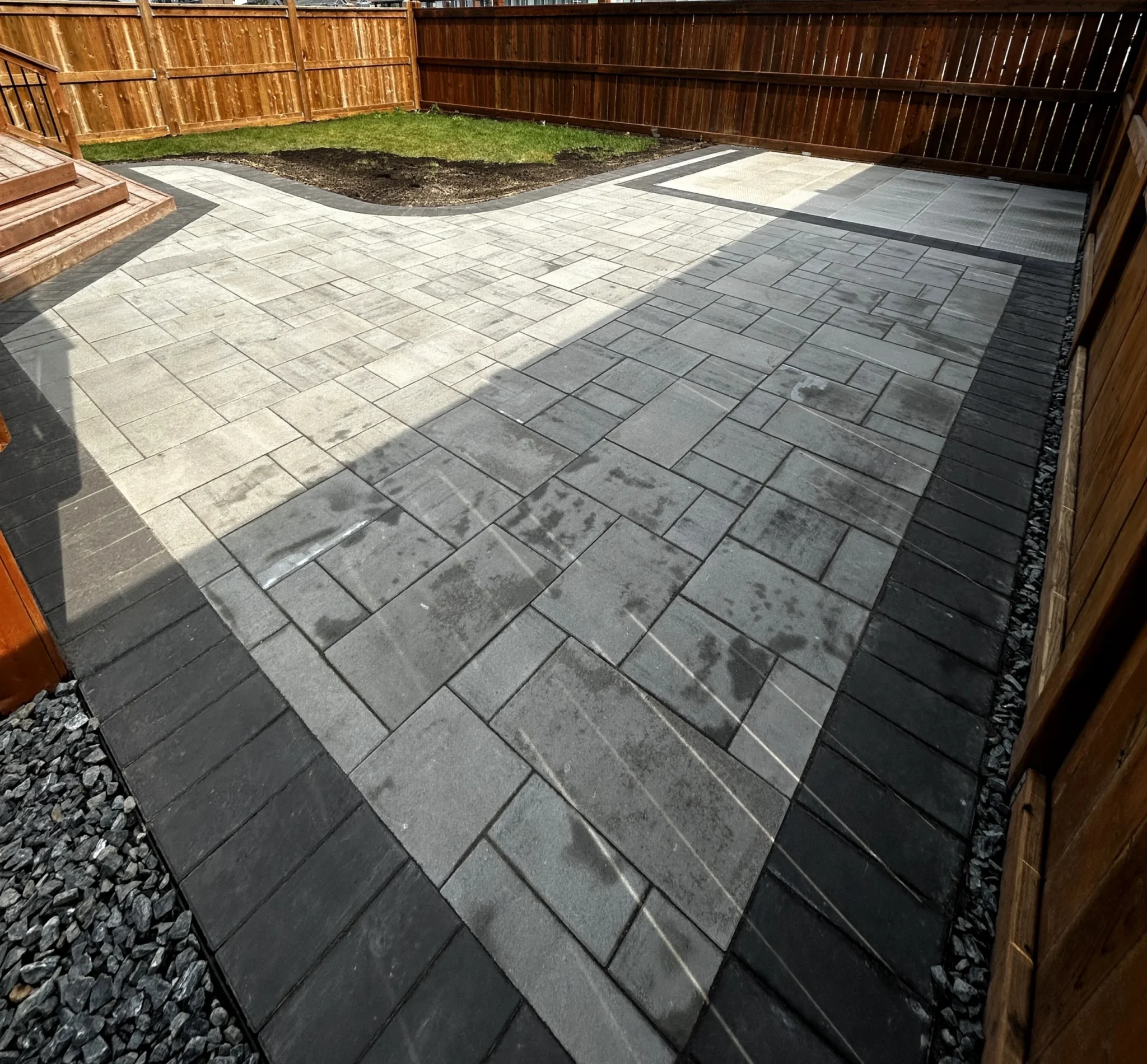
Interlocking pavers are installed tightly together in the desired pattern.
Edges are secured with:
- Proper anchoring systems
- Edge restraints
Joint Sand & Compaction
Polymeric sand is swept into joints and compacted.
This:
- Reduces movement
- Locks pavers together
- Prevents weed growth
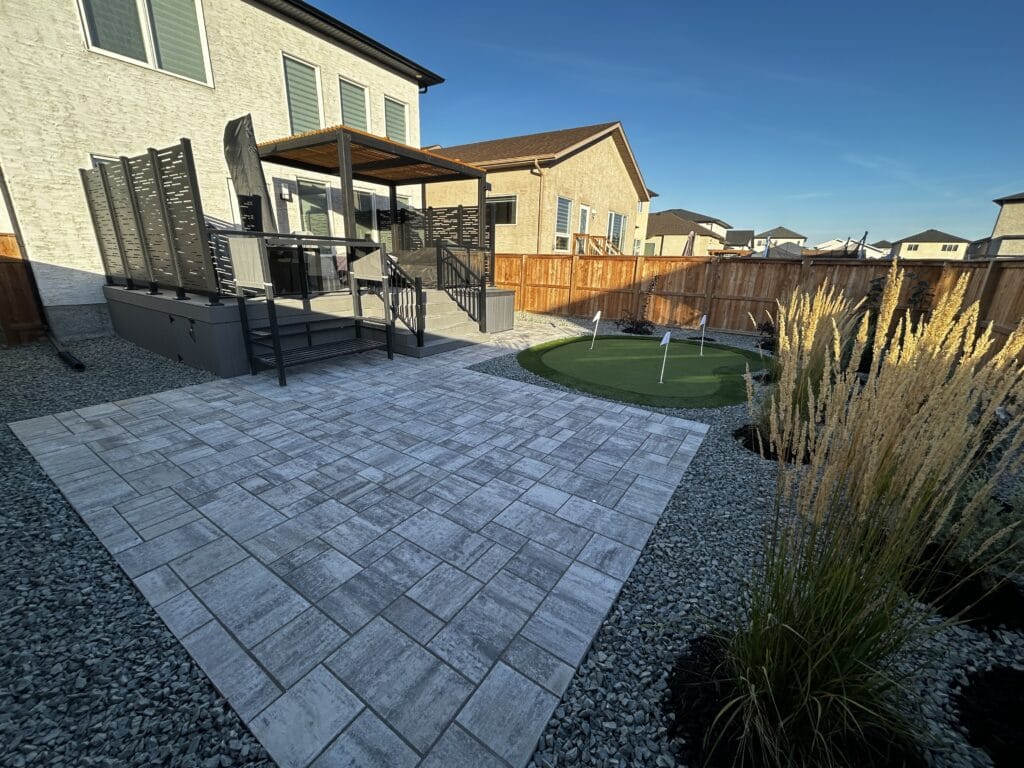
A properly built base is essential for any full new yard construction project in Winnipeg.
Winnipeg-Specific Challenges
Interlocking installations in Winnipeg face unique environmental conditions:
Freeze-Thaw Cycles
Water freezes, expands, and moves the ground — a weak base will fail quickly.
Clay Soil
Clay holds water and shifts significantly with moisture changes.
Spring Runoff
Poor drainage leads to water buildup under pavers.
Heavy Loads
Driveways must handle vehicles without settling.
This is why base depth and compaction are critical in Manitoba.
Common Base Mistakes (And Why Projects Fail)
Most failing patios and driveways share the same problems:
- Not excavating deep enough
- Using the wrong base material
- Skipping proper compaction
- No drainage planning
- Using sand as base material
- No edge restraints
These shortcuts lead to sinking, shifting, and costly repairs.
In yards with elevation changes, retaining walls are often necessary to properly manage drainage and structural support.
How Long Should an Interlocking Base Last?
A properly installed base can last 20–30+ years.
The pavers themselves can often be lifted and relaid, but the base is what determines long-term performance.
A strong base means fewer repairs and better long-term value.
Can You Fix a Bad Base?
Yes — but it requires removing the pavers and rebuilding the base properly.
This typically involves:
- Full excavation
- Reinstallation of base layers
- Proper compaction and grading
Spot fixes rarely solve the underlying problem.
Is DIY Interlocking a Good Idea?
DIY can work for very small projects, but most homeowners underestimate:
- Excavation depth
- Compaction requirements
- Drainage planning
- Material selection
Improper installation often leads to failure within a few years.
Many of these issues come down to common installation mistakes that are easy to overlook but costly to fix.
Why Professional Installation Matters
Professional installers understand:
- Proper base depth for Winnipeg conditions
- Correct material selection
- Compaction techniques
- Drainage and grading systems
This is what separates long-lasting installations from short-term results.
Frequently Asked Questions
Q: What is the best base for interlocking pavers?
A: A compacted crushed gravel base with proper depth and drainage is the best foundation.
Q: How deep should the base be in Winnipeg?
A: Typically 8–12 inches for patios and 12–18+ inches for driveways, depending on conditions.
Q: Can you install pavers on sand?
A: No — sand alone is not a proper base and will lead to failure.
Q: Why do interlocking patios sink?
A: Sinking is usually caused by poor base preparation, inadequate compaction, or drainage issues.
Q: Do I need drainage under pavers?
A: Yes, proper drainage is essential to prevent water buildup and movement.
Q: How long does interlocking last?
A: With proper installation, interlocking can last 20–30+ years.
Build Your Interlocking the Right Way — From the Base Up
Looking to install a patio or driveway that won’t sink, shift, or fail?
Contact Genesis Interlocking & Custom Landscaping for expert interlocking installation in Winnipeg built for Manitoba’s toughest conditions.
Popular Posts

What to Budget for Landscaping a New Home in Winnipeg
Learn how much to budget for landscaping a new home in Winnipeg, including grading, patios, drainage, and full yard construction costs.
What Order Should Landscaping Be Done in Winnipeg?
Learn the correct order for landscaping projects in Winnipeg, including grading, drainage, hardscaping, and planting for long-term results.
Landscaping a New Build in Winnipeg: Where to Start
Discover how to plan landscaping for a new build in Winnipeg, including grading, drainage, hardscaping, and phased project planning.
Categories
Tags
base preparation (2) contractor pricing Winnipeg (2) drainage problems (2) drainage problems Winnipeg (2) drainage Winnipeg (4) driveway pavers Winnipeg (2) foundation drainage (2) foundation drainage landscaping (1) grading Winnipeg (6) hardscaping mistakes (3) hardscaping repair (1) hardscaping Winnipeg (12) hire landscaper Winnipeg (2) interlocking base (1) interlocking drainage (1) interlocking patio Winnipeg (4) interlocking Winnipeg (4) landscape grading Winnipeg (1) landscaping (3) landscaping company Winnipeg (2) landscaping contractor Winnipeg (5) landscaping cost Winnipeg (6) landscaping mistakes Winnipeg (2) landscaping quotes Winnipeg (4) landscaping tips Winnipeg (3) landscaping Winnipeg (13) new build landscaping (2) outdoor living spaces Winnipeg (3) patio installation Winnipeg (3) paver base (1) paver installation guide (1) paver repair Winnipeg (2) retaining wall problems (2) retaining walls Winnipeg (7) Services (2) soil grading (2) water pooling yard (2) water pooling yard Winnipeg (1) Winnipeg landscaper (6) Winnipeg Landscaping (3) yard construction (2) yard drainage (3) yard drainage Winnipeg (2) yard flooding prevention Winnipeg (1) yard grading Winnipeg (3)