


Why Proper Drainage Matters for Winnipeg Properties

Why Proper Drainage Matters for Winnipeg Properties
Drainage is one of the most overlooked parts of any landscaping project — yet it is also one of the most important.
In Winnipeg, poor drainage doesn’t just create puddles. It leads to foundation movement, sinking interlocking, soil instability, and long term damage to outdoor living spaces.
Because of the city’s clay heavy soil and extreme freeze thaw cycles, proper water management is essential for any durable landscape design.
Why Drainage Is So Important in Winnipeg
In regions like Winnipeg, water does not drain as easily as in other climates.
Clay soil naturally:
- Retains water
- Expands when wet
- Contracts when dry
When this combines with freezing temperatures, it creates movement in the ground that affects everything built on top of it.
Without proper drainage, even well built landscapes will eventually fail.
What Happens When Drainage Is NOT Done Properly
Poor drainage leads to serious long term issues, including:
Sinking Interlocking Pavers
Water weakens the base underneath pavers, causing shifting and uneven surfaces.
This is the same issue explained in our guide on why interlocking patios sink in Winnipeg.
Lawn Saturation & Damage
Excess water suffocates grass roots and creates muddy, unusable yards.
Proper grading and soil preparation are critical to ensuring water drains away from your patio instead of underneath it.
Soil Erosion
Water running in the wrong direction washes away soil and destabilizes landscaping features.
Foundation Risks
Water pooling near structures increases hydrostatic pressure and long term foundation stress.
Hardscape Failure
Retaining walls, patios, and walkways can all shift when water is not properly controlled.
Key Elements of Proper Drainage
A properly designed drainage system is more than just slope — it’s a combination of planning and materials.
Proper Grading
The land should always slope away from structures.
Even small grading mistakes can cause water to collect in unwanted areas.
A properly built base is essential for any full new yard construction project in Winnipeg.
Base Preparation
For hardscapes like interlocking patios, the base must allow water to move freely without weakening the structure.
Drainage Paths
Water needs a controlled exit point such as:
- Swales
- Drain pipes
- Graded runoff zones
Without this, water will always find the weakest point in your yard.
Soil Management
Different soil types absorb and release water differently.
Winnipeg clay requires more engineered drainage than sandy soil environments.
Integration With Hardscaping
Drainage must be planned around:
- Interlocking patios
- Driveways
- Retaining walls
- Outdoor kitchens
- Walkways
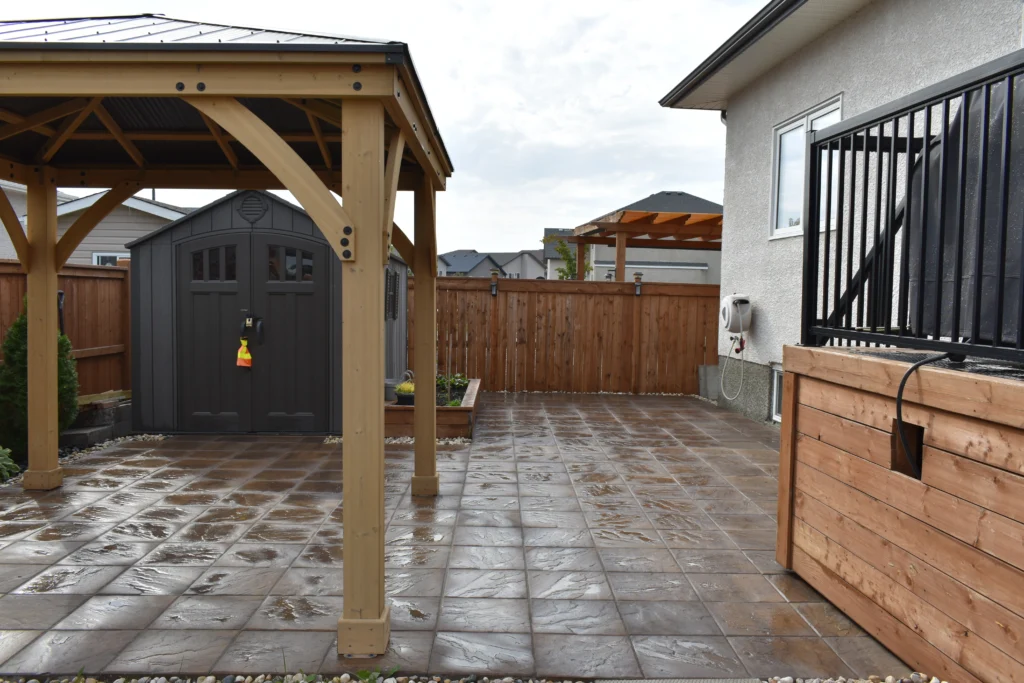
How Drainage Affects Interlocking Systems
Interlocking systems rely heavily on proper water management.
If water gets trapped beneath pavers:
- The base softens
- Compaction is lost
- Pavers begin to shift
This is one of the leading causes of long term interlocking failure in Winnipeg.
If your patio is already showing movement, it often traces back to base and drainage issues from the start.
Winnipeg Climate Makes Drainage Even More Critical
Winnipeg’s conditions create a perfect storm for drainage issues:
- Freeze thaw cycles
- Heavy spring melt
- Sudden rain events
- Slow draining clay soil
Without proper planning, water has nowhere to go — and problems develop quickly.
Signs You Have Drainage Problems
Look for these early warning signs:
- Water pooling after rain
- Soft or spongy lawn areas
- Uneven interlocking surfaces
- Soil erosion near edges
- Basement moisture issues
These are indicators that water is not being controlled properly on your property.
Can Drainage Problems Be Fixed?
Yes — but solutions depend on severity.
Common fixes include:
- Regrading the yard
- Installing drainage systems
- Rebuilding interlocking bases
- Adding soil correction layers
In some cases, full landscape redesign is required.
Why Proper Drainage Protects Your Entire Property
Good drainage isn’t just about landscaping — it protects your entire investment.
It helps:
- Extend the life of interlocking patios
- Prevent lawn damage
- Reduce maintenance costs
- Protect structures and foundations
It is one of the most important parts of any landscape design.
Related Topics You Should Read
To better understand how drainage connects to other issues:
- Read: What Is the Proper Base for Interlocking in Winnipeg
- Read: Why Interlocking Patios Sink in Winnipeg
- Read: How to Fix a Sinking Interlocking Patio in Winnipeg
- Read: Common Interlocking Mistakes That Cause Failure
These all connect directly to drainage and base preparation.
Build It Right From the Ground Up
Drainage is not something added at the end — it must be planned from the beginning of every project.
Without it, even high quality materials will fail over time.
Proper planning ensures your yard performs correctly in every season.
Frequently Asked Questions
Q: What is the best way to improve drainage in a Winnipeg yard?
A: The best way to improve drainage is through proper grading, soil preparation, and installing controlled drainage paths such as swales or drainage systems. In Winnipeg, clay soil requires careful planning to ensure water moves away from structures and hardscaping.
Q: Why does water pool in my yard after rain?
A: Water pooling is usually caused by poor grading, compacted soil, or a lack of drainage paths. In Winnipeg, clay soil slows water absorption, making proper drainage design essential.
Q: Can poor drainage damage interlocking patios?
A: Yes, poor drainage is one of the leading causes of interlocking failure. Water trapped beneath the pavers weakens the base, leading to sinking, shifting, and uneven surfaces over time.
Q: How do I know if my yard has drainage issues?
A: Common signs include water pooling, soggy grass, erosion, uneven interlocking, and water collecting near your home’s foundation.
Q: Does Winnipeg soil affect drainage?
A: Yes, Winnipeg’s clay heavy soil retains water and expands and contracts with moisture changes. This makes proper drainage and base preparation critical for long term performance.
Q: Can drainage problems be fixed without redoing the whole yard?
A: In some cases, yes. Minor issues can be improved with regrading or adding drainage solutions. However, severe problems may require rebuilding sections of the landscape to correct the underlying issue.
Q: Do interlocking patios need drainage underneath?
A: Yes, proper drainage is essential. A well built base allows water to move through and away from the structure, preventing long term damage.
Q: How much slope is needed for proper drainage?
A: Typically, a slope of at least 2% (about 1/4 inch per foot) away from structures is recommended to ensure proper water runoff.
Q: Is drainage important for new landscaping projects?
A: Yes, drainage should be planned at the beginning of any project. Without it, even well built landscapes can fail due to water related issues.
Q: How long does a proper drainage system last?
A: A properly designed and installed drainage system can last decades with minimal maintenance, especially when integrated into the overall landscape design.
Need a landscape designed to handle Winnipeg’s drainage challenges?
Popular Posts

What to Budget for Landscaping a New Home in Winnipeg
Learn how much to budget for landscaping a new home in Winnipeg, including grading, patios, drainage, and full yard construction costs.
What Order Should Landscaping Be Done in Winnipeg?
Learn the correct order for landscaping projects in Winnipeg, including grading, drainage, hardscaping, and planting for long-term results.
Landscaping a New Build in Winnipeg: Where to Start
Discover how to plan landscaping for a new build in Winnipeg, including grading, drainage, hardscaping, and phased project planning.
Categories
Tags
base preparation (2) contractor pricing Winnipeg (2) drainage problems (2) drainage problems Winnipeg (2) drainage Winnipeg (4) driveway pavers Winnipeg (2) foundation drainage (2) foundation drainage landscaping (1) grading Winnipeg (6) hardscaping mistakes (3) hardscaping repair (1) hardscaping Winnipeg (12) hire landscaper Winnipeg (2) interlocking base (1) interlocking drainage (1) interlocking patio Winnipeg (4) interlocking Winnipeg (4) landscape grading Winnipeg (1) landscaping (3) landscaping company Winnipeg (2) landscaping contractor Winnipeg (5) landscaping cost Winnipeg (6) landscaping mistakes Winnipeg (2) landscaping quotes Winnipeg (4) landscaping tips Winnipeg (3) landscaping Winnipeg (13) new build landscaping (2) outdoor living spaces Winnipeg (3) patio installation Winnipeg (3) paver base (1) paver installation guide (1) paver repair Winnipeg (2) retaining wall problems (2) retaining walls Winnipeg (7) Services (2) soil grading (2) water pooling yard (2) water pooling yard Winnipeg (1) Winnipeg landscaper (6) Winnipeg Landscaping (3) yard construction (2) yard drainage (3) yard drainage Winnipeg (2) yard flooding prevention Winnipeg (1) yard grading Winnipeg (3)