


INTERLOCKING VS CONCRETE: WHAT’S BETTER IN WINNIPEG?
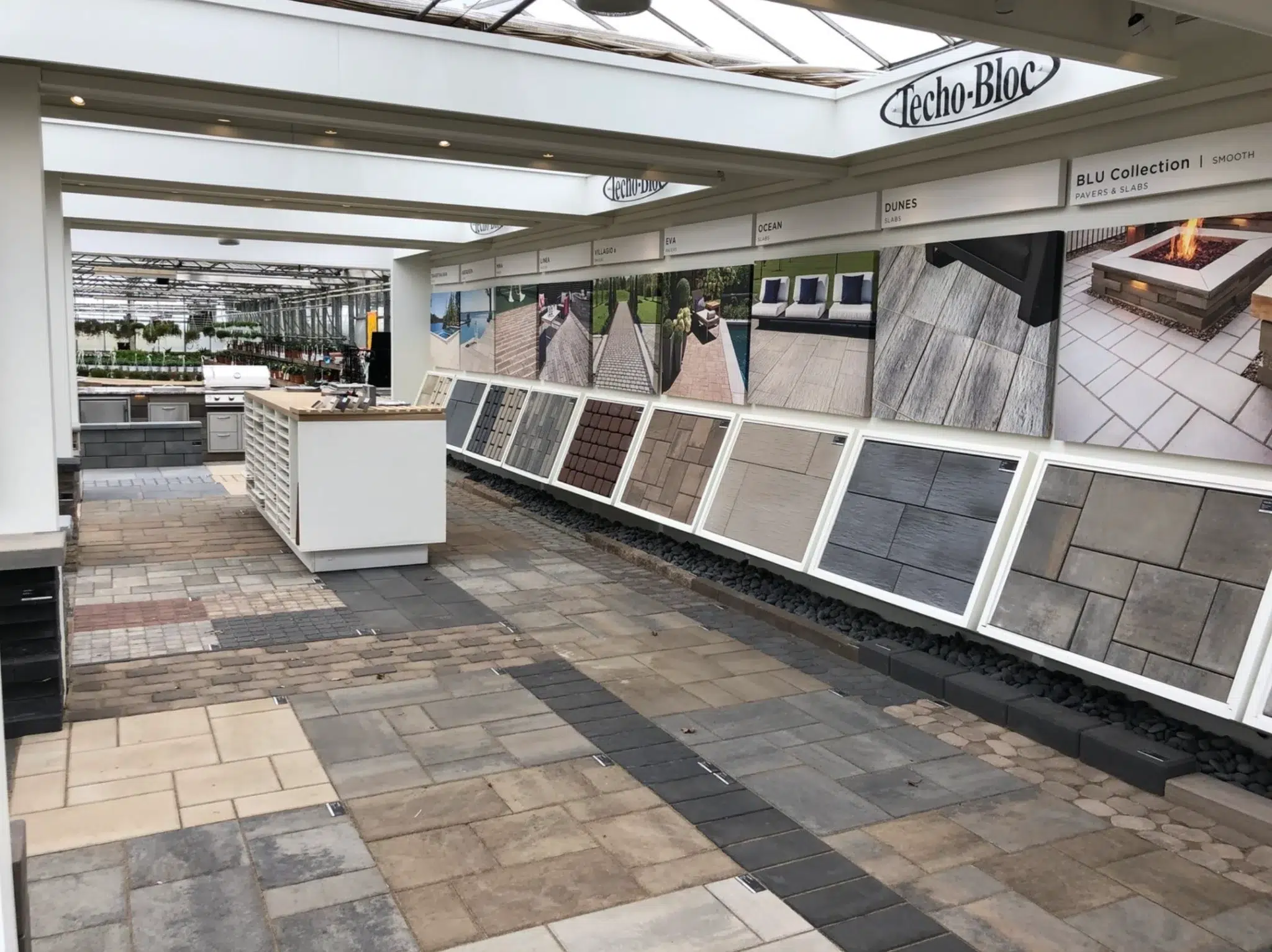
INTERLOCKING VS CONCRETE: WHAT’S BETTER IN WINNIPEG?
When planning a new patio, driveway, or walkway, one of the most common questions Winnipeg homeowners ask is:
Should I choose interlocking paving stones or poured concrete?
Both options have their advantages—but in a climate like Winnipeg’s, the differences become much more important.
Between freeze-thaw cycles, shifting soil, and seasonal moisture, the wrong choice can lead to cracking, sinking, and costly repairs.
In this guide, we’ll break down interlocking vs concrete in Winnipeg so you can make the right decision for your property, budget, and long-term goals.
QUICK ANSWER
Interlocking paving stones are generally better than concrete in Winnipeg because they are flexible, more durable in freeze-thaw conditions, easier to repair, and longer-lasting. Concrete is more affordable upfront but is prone to cracking and costly repairs over time.
WHAT IS INTERLOCKING?
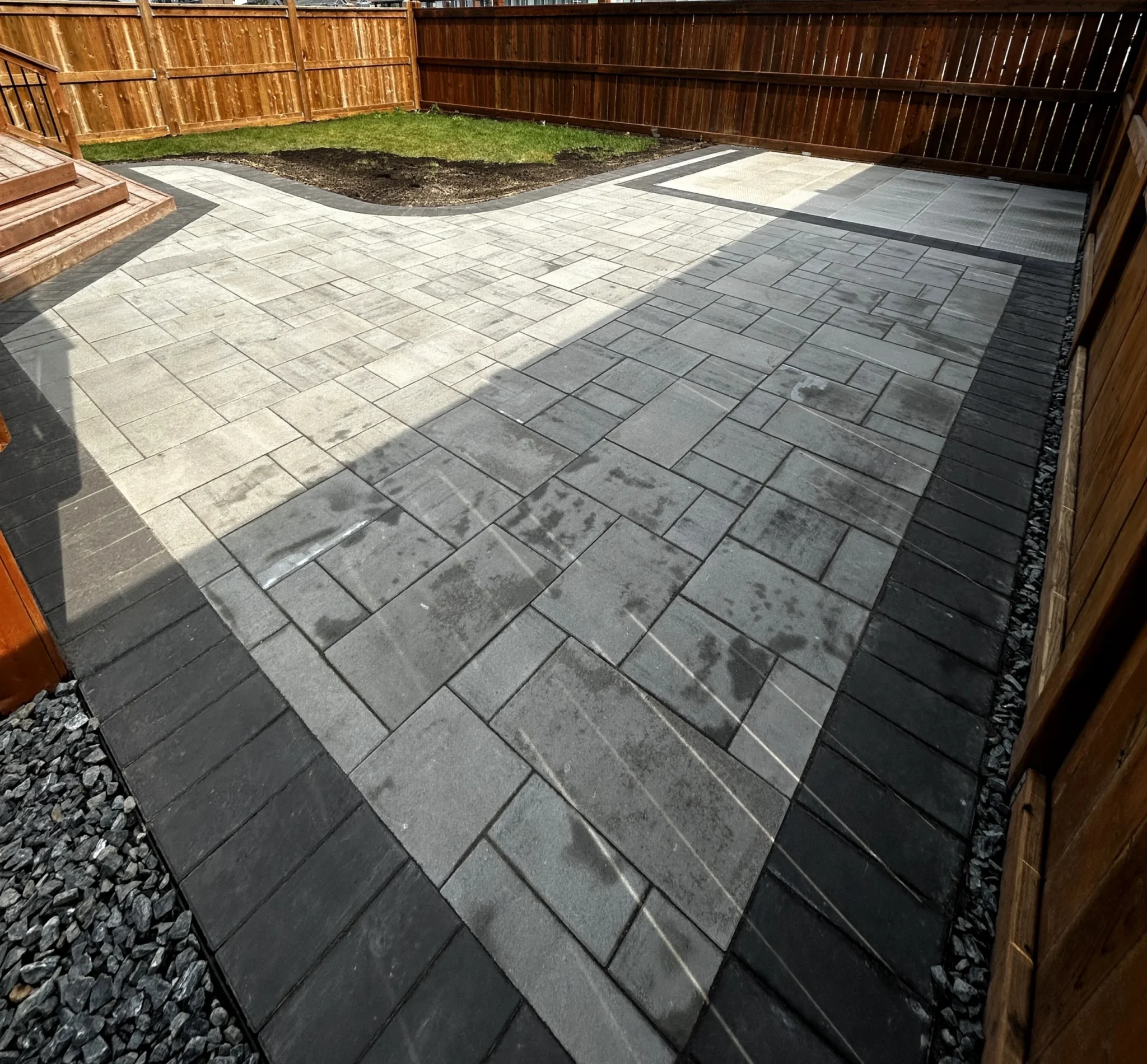
Interlocking paving stones are individual concrete pavers installed over a compacted base and sand layer.
They are designed to:
- flex with ground movement
- allow drainage through joints
- be replaced individually if damaged
This system makes them ideal for harsh climates like Manitoba.
WHAT IS POURED CONCRETE?
Concrete surfaces are poured as a single slab and then cured into a solid structure.
They are commonly used for:
- driveways
- sidewalks
- patios
While concrete can look clean and modern initially, it behaves very differently under stress compared to interlocking systems.
INTERLOCKING VS CONCRETE: KEY DIFFERENCES
Freeze-Thaw Performance (MOST IMPORTANT IN WINNIPEG)
Winnipeg’s climate causes soil to expand and contract throughout the year.
Interlocking:
- Moves slightly without damage
- Handles frost heave well
Concrete:
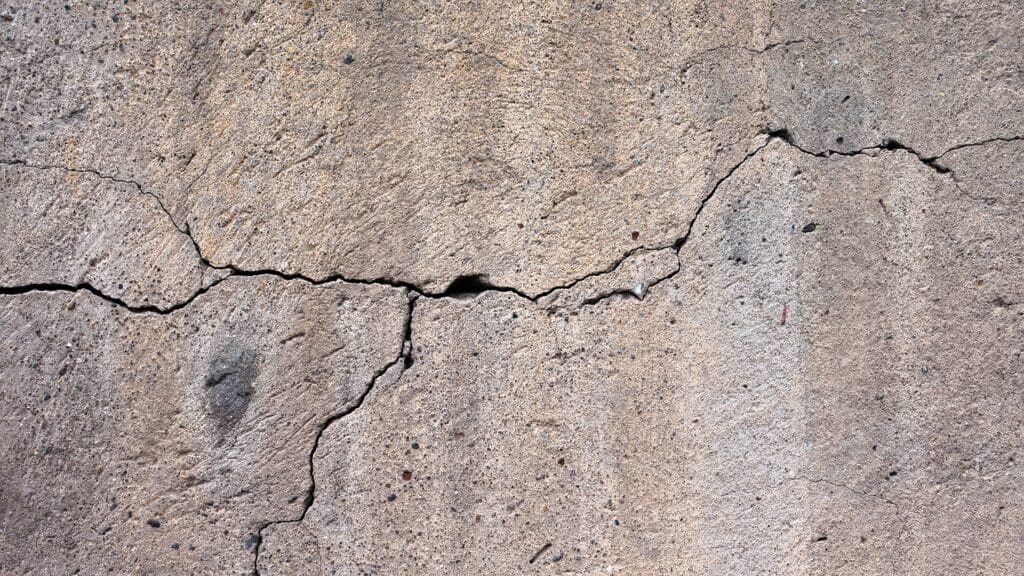
- Rigid and brittle
- Cracks under movement
This is the biggest reason interlocking outperforms concrete locally.
Durability & Lifespan
Interlocking:
- 20–30+ years when properly installed
- Maintains structure over time
Concrete:
- 10–20 years (often less with cracking)
- Surface deterioration over time
Repairs & Maintenance
Interlocking:
- Individual stones can be replaced
- Easy, low-cost repairs
Concrete:
- Cracks are permanent
- Repairs are visible or require full replacement
This is a major long-term cost difference.
Drainage & Water Management
Interlocking:
- Water drains through joints
- Reduces pooling and runoff
Concrete:
- Water sits on surface
- Can lead to pooling and ice buildup
Cost Comparison
Interlocking:
- Higher upfront cost
- Lower long-term cost
Concrete:
- Lower upfront cost
- Higher repair/replacement costs over time
Cheap now often = expensive later.
Appearance & Design Options
Interlocking:
- Wide range of colours, styles, patterns
- High-end custom look
Concrete:
- Limited design flexibility
- Can be stamped or colored, but still less versatile
WHEN CONCRETE MIGHT MAKE SENSE
Concrete can still be a reasonable option if:
- You have a tight budget
- You need a quick, simple installation
- You’re okay with potential cracking over time
However, it’s important to understand the trade-offs before choosing this route.
WHEN INTERLOCKING IS THE BETTER CHOICE
Interlocking is the better investment if you want:
- Long-term durability
- Minimal maintenance
- Better performance in Winnipeg weather
- Higher property value
- A premium finished look
Most homeowners planning a long-term upgrade choose interlocking.
WINNIPEG-SPECIFIC CONSIDERATIONS
In Winnipeg, the choice between interlocking and concrete isn’t just about price—it’s about performance.
Factors that matter locally:
- Heavy clay soil movement
- Freeze-thaw cycles
- Snow and ice buildup
- Drainage challenges
Interlocking is specifically suited to handle these conditions.
COMMON MISTAKES TO AVOID
- Choosing concrete solely based on price
- Hiring contractors who skip proper base prep
- Ignoring drainage requirements
- Not planning for long-term maintenance
These mistakes often lead to premature failure.
RELATED SERVICES
If you’re considering upgrading your outdoor space, you may also want to explore:
- Interlocking patio installation in Winnipeg
- Retaining walls in Winnipeg
- Landscaping services in Winnipeg
These services often work together in a complete yard transformation.
Frequently Asked Questions
Q: Is interlocking more expensive than concrete in Winnipeg?
A: Yes, interlocking typically costs more upfront, but it often saves money long-term due to fewer repairs.
Q: Does concrete always crack in Winnipeg?
A: Most concrete surfaces will crack over time due to freeze-thaw cycles and ground movement.
Q: How long does interlocking last compared to concrete?
A: Interlocking can last 20–30+ years, while concrete often needs repair or replacement sooner.
Q: Which is better for driveways in Winnipeg?
A: Interlocking is generally better due to its ability to handle heavy loads and movement without cracking.
Q: Can you repair interlocking easier than concrete?
A: Yes, individual pavers can be replaced, while concrete repairs are more difficult and often visible.
FINAL THOUGHTS
When comparing interlocking vs concrete in Winnipeg, the right choice depends on your priorities.
If you’re looking for:
- durability
- long-term value
- better performance in harsh weather
Interlocking is the clear winner.
If you want a quick, lower-cost option and accept potential long-term issues, concrete may still work.
GET EXPERT ADVICE
Not sure what’s right for your project?
Contact Genesis Interlocking & Custom Landscaping for expert guidance and a detailed quote based on your property and goals.
Popular Posts

What to Budget for Landscaping a New Home in Winnipeg
Learn how much to budget for landscaping a new home in Winnipeg, including grading, patios, drainage, and full yard construction costs.
What Order Should Landscaping Be Done in Winnipeg?
Learn the correct order for landscaping projects in Winnipeg, including grading, drainage, hardscaping, and planting for long-term results.
Landscaping a New Build in Winnipeg: Where to Start
Discover how to plan landscaping for a new build in Winnipeg, including grading, drainage, hardscaping, and phased project planning.
Categories
Tags
base preparation (2) contractor pricing Winnipeg (2) drainage problems (2) drainage problems Winnipeg (2) drainage Winnipeg (4) driveway pavers Winnipeg (2) foundation drainage (2) foundation drainage landscaping (1) grading Winnipeg (6) hardscaping mistakes (3) hardscaping repair (1) hardscaping Winnipeg (12) hire landscaper Winnipeg (2) interlocking base (1) interlocking drainage (1) interlocking patio Winnipeg (4) interlocking Winnipeg (4) landscape grading Winnipeg (1) landscaping (3) landscaping company Winnipeg (2) landscaping contractor Winnipeg (5) landscaping cost Winnipeg (6) landscaping mistakes Winnipeg (2) landscaping quotes Winnipeg (4) landscaping tips Winnipeg (3) landscaping Winnipeg (13) new build landscaping (2) outdoor living spaces Winnipeg (3) patio installation Winnipeg (3) paver base (1) paver installation guide (1) paver repair Winnipeg (2) retaining wall problems (2) retaining walls Winnipeg (7) Services (2) soil grading (2) water pooling yard (2) water pooling yard Winnipeg (1) Winnipeg landscaper (6) Winnipeg Landscaping (3) yard construction (2) yard drainage (3) yard drainage Winnipeg (2) yard flooding prevention Winnipeg (1) yard grading Winnipeg (3)